










 This November, voters in California and Ohio soundly rejected ballot
measures calling for independent redistricting processes to be created
for each state's Congressional and state legislative line-drawing
processes. The failure of these efforts does not indicate voters
dislike reform, but it shows voters can be suspicious of plans that
promise more than they can achieve, as well as apparent partisan
motivations intrinsic to any mid-decade, state-by-state redistricting
initiative.
This November, voters in California and Ohio soundly rejected ballot
measures calling for independent redistricting processes to be created
for each state's Congressional and state legislative line-drawing
processes. The failure of these efforts does not indicate voters
dislike reform, but it shows voters can be suspicious of plans that
promise more than they can achieve, as well as apparent partisan
motivations intrinsic to any mid-decade, state-by-state redistricting
initiative. With voters still seeking public interest elections, the time has come for an honest dialogue about the actual effects of redistricting. Additionally, the dialogue must be expanded to give line-drawing bodies more tools and options, such as multimember districts and proportional voting systems. In the least, we can do something unheard of in political circles: let the citizens decide. States should look to create citizens assemblies to study and recommend electoral changes, as British Columbia recently did with much success. In the meantime, Congress should embrace national efforts to reform redistricting, and in doing so avoid the state-by-state partisan calculations that the failed initiatives created.
[ FairVote Staff Blogs on Redistricting ]
[ Rob Richie's Op. Ed. on Redistricting ]
[ FairVote's Redistricting Reform Watch ]
[ Heather Gerken on a Citizens Assembly ]
[ Steven Hill Calls for a Citizens Assembly ]
[ Federal Redistricting Legislation ]
 FairVote releases a new report Who Picks the President,
which chronicles the distribution of television ad spending and
political candidate visits during the height of the 2004 presidential
election. The report finds further evidence that a vast gulf has
developed between a handful of swing states that are zealously courted
by major political campaigns, and the rest of the country, which is
effectively shut out of the process.
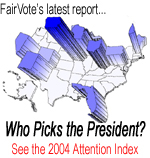
FairVote releases a new report Who Picks the President,
which chronicles the distribution of television ad spending and
political candidate visits during the height of the 2004 presidential
election. The report finds further evidence that a vast gulf has
developed between a handful of swing states that are zealously courted
by major political campaigns, and the rest of the country, which is
effectively shut out of the process.