On May 1, London held its third mayoral election using a form of instant
runoff voting. The Conservative Party's Boris Johnson defeated Labor
Party incumbent Ken Livingstone, winning 53% to 47% in the instant
runoff. This election had the city's best turnout ever -- a 20% increase
compared to the 2004 elections.
On May 1, London held its third mayoral election using a form of instant
runoff voting. The Conservative Party's Boris Johnson defeated Labor
Party incumbent Ken Livingstone, winning 53% to 47% in the instant
runoff. This election had the city's best turnout ever -- a 20% increase
compared to the 2004 elections.Also known as the "supplementary vote," the London system limits voters to a first choice and second choice and moves directly to a second round of voting between the top two finishers. It was first implemented in 2000 after 72% of the London electorate approved direct mayoral elections with IRV by referendum. The system is increasingly popular in England: 12 cities use this form of IRV for mayoral elections.
Londoners also elected the London Assembly (14 members elected directly from constituencies and 11 seats at-large) through a mixed member proportional system. The Conservative and Labor Parties swept the 14 winner-take-all seats, but smaller parties won a total of six seats due to proportional voting.
[Official Results at London Elects]
[British Analysis Focused on the Assembly Results]
[Animated Guides on London Mayoral and Assembly Elections]
[The Guardian's Coverage]
[Evening Standard Article about Mayoral Election]
[Amy Ngai on the FairVote Blog]
 On April 4, Vermont governor Jim Douglas chose to veto legislation to re-establish majority elections for Congress in his state through instant runoff voting. Vermont would have been the first state to enact IRV for Congress; legislative leaders affirmed their commitment to the bill, and it is sure to move in the state again. FairVote has worked hard to support this legislation, which likely generated more than 600 phone calls to the governor from Vermonters.
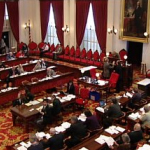 On March 14, 2008, the Vermont House joined the Senate in approving legislation that would implement instant runoff voting (IRV) for congressional elections beginning in 2008. The measure passed by a vote of 81 to 60. If this bill is implemented, Vermont will be the first state to adopt IRV for statewide elections. This legislation generated strong support from U.S. Senator Bernie Sanders, U.S. Rep. Peter Welch, Common Cause, Vermont PIRG, FairVote and the League of Women Voters of Vermont. IRV has a strong history of support in Vermont including endorsements from more than 50 town meetings and former governor Howard Dean.