












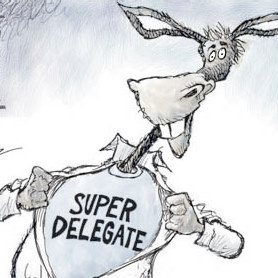
 The Republican and Democratic parties have been taking encouraging steps toward reforming the way presidential candidates are nominated. The Hill reported in June that the Republican National Committee is engaging in internal deliberations—as well as talks with their Democratic counterparts—on adjusting the nomination calendar so that more voters get a chance to have a substantive say in who becomes the party standard-bearer. Meanwhile, the Democrat Party is trying to avoid the frontloading chaos of the 2008 contest, attempting to impose some order on the scheduling of states’ primaries and caucuses, as well as reexamining the role of superdelegates.
This week, FairVote’s Innovative Analysis takes a fresh look at reforming the nomination process, by suggesting that we add to the debate a system in which well-ordered state-by-state contests culminate in a final, decisive national primary day.
Links
- The Hill: RNC poised to begin altering its primary calendar for 2012
- The Note: Democrats Work To Avoid 2008 Primary Strife
- FixThePrimaries.com
- FairVote Innovative Analysis: "Primary Power to the People" (Previous editions here)
- Delegating Democracy: How the Parties Can Make their Presidential Nominating Contests More Democratic
 On July 13, 2009, D.C. City Council’s Committee on Government Operations and the Environment held a hearing on the Omnibus Election Reform Act of 2009 (Bill 18-345). Introduced by Councilmembers Mary Cheh, Harry Thomas and Chairman Vincent Gray, the bill includes a variety of FairVote-endorsed election reforms and has strong support from a number of pro-democracy organizations in the District. The bill would allow 16-year-olds to pre-register to vote, permit 17-year-olds to vote in primaries if they are eligible to vote in the general election and establish same-day registration. It also expands the eligibility requirements for poll workers and sets up a commission to study the feasibility of automatic voter registration. FairVote has previously argued that Washington, D.C. should be a beacon of democracy, a model for election reform and administration that can serve as a positive example to the rest of the country. FairVote’s Right to Vote Director Adam Fogel testified at the hearing.