





 As national attention turns to California Governor Arnold
Schwarzenegger's plan to replace the state's partisan gerrymandering
system with an independent redistricting commission, FairVote seeks to
highlight beneficial elements of the plan, as well as ways to improve
upon it.
As national attention turns to California Governor Arnold
Schwarzenegger's plan to replace the state's partisan gerrymandering
system with an independent redistricting commission, FairVote seeks to
highlight beneficial elements of the plan, as well as ways to improve
upon it. We applaud the governor for highlighting no-choice elections in California and hope to broaden the discussion to include additional considerations -- indeed we need far more action on reforming redistricting in Congress and in states around the nation.
Over time we have consistently backed non-partisan
redistricting criteria, but we believe the process should not end
there, as competitive races and increased representation of women and
communities of color requires more than just a neutral line-drawing
process.
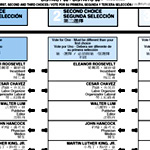 An exit poll commissioned by the City and carried out by the Public
Research Institute at San Francisco State University indicates that a
large majority understands and prefers the newly-instituted IRV
election system. Some key figures:
An exit poll commissioned by the City and carried out by the Public
Research Institute at San Francisco State University indicates that a
large majority understands and prefers the newly-instituted IRV
election system. Some key figures: On
November 2, 2004, San Francisco voters made history when they went to the polls
and used ranked choice voting (also known as instant runoff voting) to elect
seven members of the Board of Supervisors (city council). All winners were
determined by Friday afternoon, less than 72 hours after the polls had closed,
and the city saved millions of tax dollars by avoiding a low turnout, December
runoff election. In addition, all winners were elected with many more votes than in previous races
for Supervisor, so more voters had a say in who their local representatives are.
All in all, it was a great success for the maiden voyage of ranked choice voting in San Francisco.
On
November 2, 2004, San Francisco voters made history when they went to the polls
and used ranked choice voting (also known as instant runoff voting) to elect
seven members of the Board of Supervisors (city council). All winners were
determined by Friday afternoon, less than 72 hours after the polls had closed,
and the city saved millions of tax dollars by avoiding a low turnout, December
runoff election. In addition, all winners were elected with many more votes than in previous races
for Supervisor, so more voters had a say in who their local representatives are.
All in all, it was a great success for the maiden voyage of ranked choice voting in San Francisco.