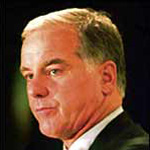
 On March 16th, Former Vermont Governor and Democratic National Committee Chair Howard Dean continued his support for instant runoff voting on Vermont Radio's Mark Johnson Show. Commenting on Burlington's recent IRV election, Dean said "I think the best and most democratic way to use to elect people in multiparty elections is instant runoff voting." Dean also supported the system when it was first used in Burlington in 2006.
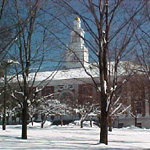 Citizens of Burlington, Vermont went to the polls on Tuesday, March 3rd to vote for the second time in an election using instant runoff voting. At 8:25 PM, the city declared that incumbent Mayor Bob Kiss had won reelection in the third and final round of counting, narrowly edging out challenger Kurt Wright, 51.5% to 48.5%. The race was unique in that it had four candidates that had a legitimate shot at winning: Progressive Kiss, Republican Wright, Democrat Andy Montroll, and independent Dan Smith. In most other American cities, there would be fear of "spoiler" candidates, but IRV allowed all four candidates to run without having to worry about being labeled "spoilers."
 On April 4, Vermont governor Jim Douglas chose to veto legislation to re-establish majority elections for Congress in his state through instant runoff voting. Vermont would have been the first state to enact IRV for Congress; legislative leaders affirmed their commitment to the bill, and it is sure to move in the state again. FairVote has worked hard to support this legislation, which likely generated more than 600 phone calls to the governor from Vermonters.
Thankful Burlington has instant runoff
As a Burlington resident, all I can say is thank goodness Burlington uses instant runoff voting (IRV). We had a good crop of serious and competent candidates, but without typical concerns about "spoilers" or splitting the vote. I don't think that we would have had as many good candidates to choose from and such an issue-focused campaign without IRV.
If Burlington election laws settled for mere plurality winners, we would have been stuck with a "winner" that most voters didn't want in the office. It is amusing that Kurt Wright's sore-loser supporters pretend that he got "the most votes," when Bob Kiss in fact did (51.5 percent to 48.5 percent). It is sort of like they took a snapshot picture of a horse race at the half-way point and saw which horse was ahead, and then complained when another horse won at the actual finish line.
All the candidates knew the rules going into the election booth; we don't need these sour grapes from those who didn't succeed. The IRV system worked just fine three years ago and worked well again this week. Now let's move on to the business of securing Burlington's future in this time of economic uncertainty.
THOMAS DeSISTO
Burlington
IRV worked as it was supposed to
Instant runoff voting worked in the mayoral election exactly as it was supposed to. Had there been a candidate with over 50 percent of the vote, it would not have been used at all. Since there was not a majority winner, the other ranked votes of the later-ranked candidates came into play.
This is just what would have happened with a run off election. Given the (eventual) top two choices, voters expressed their choice. I cannot imagine, in these tough times, that citizens of Burlington would have preferred to wait for a run-off election which costs the city money and usually draws many fewer voters. Everyone who voted on March 3 had his/her ballot counted, and Mayor Bob Kiss was chosen to continue his leadership of our great city.
I hope we can appreciate that we had five worthy candidates in the mayoral election, and that now we should focus on the issues at hand.
CONNIE KROSNEY
Burlington
As a Burlington resident, all I can say is thank goodness Burlington uses instant runoff voting (IRV). We had a good crop of serious and competent candidates, but without typical concerns about "spoilers" or splitting the vote. I don't think that we would have had as many good candidates to choose from and such an issue-focused campaign without IRV.
If Burlington election laws settled for mere plurality winners, we would have been stuck with a "winner" that most voters didn't want in the office. It is amusing that Kurt Wright's sore-loser supporters pretend that he got "the most votes," when Bob Kiss in fact did (51.5 percent to 48.5 percent). It is sort of like they took a snapshot picture of a horse race at the half-way point and saw which horse was ahead, and then complained when another horse won at the actual finish line.
All the candidates knew the rules going into the election booth; we don't need these sour grapes from those who didn't succeed. The IRV system worked just fine three years ago and worked well again this week. Now let's move on to the business of securing Burlington's future in this time of economic uncertainty.
THOMAS DeSISTO
Burlington
IRV worked as it was supposed to
Instant runoff voting worked in the mayoral election exactly as it was supposed to. Had there been a candidate with over 50 percent of the vote, it would not have been used at all. Since there was not a majority winner, the other ranked votes of the later-ranked candidates came into play.
This is just what would have happened with a run off election. Given the (eventual) top two choices, voters expressed their choice. I cannot imagine, in these tough times, that citizens of Burlington would have preferred to wait for a run-off election which costs the city money and usually draws many fewer voters. Everyone who voted on March 3 had his/her ballot counted, and Mayor Bob Kiss was chosen to continue his leadership of our great city.
I hope we can appreciate that we had five worthy candidates in the mayoral election, and that now we should focus on the issues at hand.
CONNIE KROSNEY
Burlington