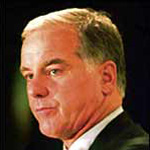
 On March 16th, Former Vermont Governor and Democratic National Committee Chair Howard Dean continued his support for instant runoff voting on Vermont Radio's Mark Johnson Show. Commenting on Burlington's recent IRV election, Dean said "I think the best and most democratic way to use to elect people in multiparty elections is instant runoff voting." Dean also supported the system when it was first used in Burlington in 2006.
 Citizens of Burlington, Vermont went to the polls on Tuesday, March 3rd to vote for the second time in an election using instant runoff voting. At 8:25 PM, the city declared that incumbent Mayor Bob Kiss had won reelection in the third and final round of counting, narrowly edging out challenger Kurt Wright, 51.5% to 48.5%. The race was unique in that it had four candidates that had a legitimate shot at winning: Progressive Kiss, Republican Wright, Democrat Andy Montroll, and independent Dan Smith. In most other American cities, there would be fear of "spoiler" candidates, but IRV allowed all four candidates to run without having to worry about being labeled "spoilers."
 On April 4, Vermont governor Jim Douglas chose to veto legislation to re-establish majority elections for Congress in his state through instant runoff voting. Vermont would have been the first state to enact IRV for Congress; legislative leaders affirmed their commitment to the bill, and it is sure to move in the state again. FairVote has worked hard to support this legislation, which likely generated more than 600 phone calls to the governor from Vermonters.
In a 16-12 vote, the Senate approved the use of instant runoff voting, a system in which voters would be asked to rank order their choices for Congress in order of preference. If no one candidate drew a majority of the first-place votes, the second choices of voters would be taken into account.
The legislation calls for the system � which was used in last year's Burlington mayoral race � to be used beginning in 2008 for Vermont's lone seat in the U.S. House of Representatives. If approved, Vermont would be the first state in the nation to use it, officials said.
It's unclear whether the House will have time to act on the measure before the Legislature adjourns next month, said House Speaker Gaye Symington, D-Jericho.
U.S. Rep. Peter Welch and U.S. Sen. Bernie Sanders favor runoff voting. The two, who testified in support of it before a legislative committee last month, say it would help address a provision in the state Constitution that gives the power of naming a winner in some statewide races to the Legislature when there's no clear majority.
Gov. Jim Douglas opposes it.
"He believes fundamentally in one person, one vote," said spokesman Jason Gibbs.
State Sen. Hinda Miller, who lost the Burlington mayoral race in the first trial of instant runoff voting, is against it, also.
"I don't think it really gives an honest evaluation of who people choose first," she said. "This is a game of chance," said Miller, D-Chittenden.
Miller said that during her campaign, her camp spent time trying to predict how instant runoff voting would affect the race. "It becomes a significant part of the campaign � who should you vote for second? It got very confusing for all of us."