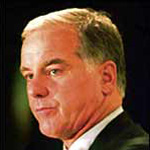
 On March 16th, Former Vermont Governor and Democratic National Committee Chair Howard Dean continued his support for instant runoff voting on Vermont Radio's Mark Johnson Show. Commenting on Burlington's recent IRV election, Dean said "I think the best and most democratic way to use to elect people in multiparty elections is instant runoff voting." Dean also supported the system when it was first used in Burlington in 2006.
 Citizens of Burlington, Vermont went to the polls on Tuesday, March 3rd to vote for the second time in an election using instant runoff voting. At 8:25 PM, the city declared that incumbent Mayor Bob Kiss had won reelection in the third and final round of counting, narrowly edging out challenger Kurt Wright, 51.5% to 48.5%. The race was unique in that it had four candidates that had a legitimate shot at winning: Progressive Kiss, Republican Wright, Democrat Andy Montroll, and independent Dan Smith. In most other American cities, there would be fear of "spoiler" candidates, but IRV allowed all four candidates to run without having to worry about being labeled "spoilers."
 On April 4, Vermont governor Jim Douglas chose to veto legislation to re-establish majority elections for Congress in his state through instant runoff voting. Vermont would have been the first state to enact IRV for Congress; legislative leaders affirmed their commitment to the bill, and it is sure to move in the state again. FairVote has worked hard to support this legislation, which likely generated more than 600 phone calls to the governor from Vermonters.
By Catherine A. Rader
Published March 29th 2007 in The Barre Times / Montpeiler Argus
The Vermont Senate is currently considering using IRV for Vermont's U.S. House race in 2008. As proposed, the IRV system before the Legislature gives voters the option to rank candidates in order of choice: first, second, third, etc. If a candidate wins a majority of first choices, the election is over. If not, the top two candidates advance to an instant runoff election, based on the other choices on the ballots cast for the candidates who were eliminated. This guarantees the election of the candidate who gets the majority of the votes. Under this system, the instant runoff count would only be necessary if there were no immediate winner � and it would take less than one day to do, at a cost of perhaps $12,000. That's a small price to pay for majority rule.
Voters of all educational backgrounds have been using IRV ballots effectively. In Burlington's first IRV election for mayor in 2006, 99.9 percent of ballots were valid. Landslide majorities found the system easy and supported its implementation statewide.
Majority voting is the aim of IRV, without the time, expense, and drop-off in participation inherent in a traditional runoff. Rutland's recent mayoral race was won with 33 percent of the vote. That means that 67 percent of the voters voted for someone else. Without IRV, we will never know whether the mayor did indeed have majority support or if the majority of voters preferred another candidate.
These results help explain why IRV has averaged 66 percent support in the last eight cities which voted on it. It's high time for majority voting in Vermont.
Catherine A. Rader
President, League of Women Voters of Vermont